
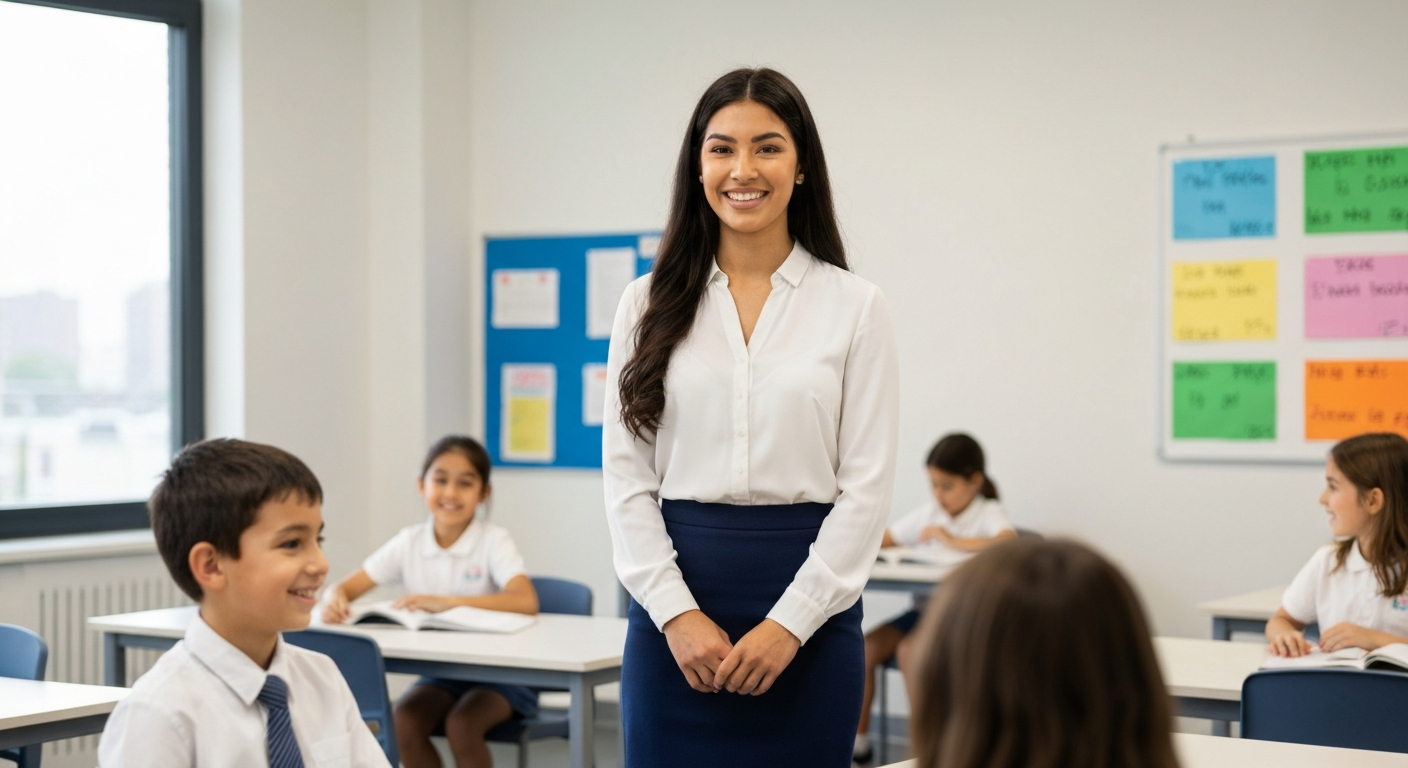
Vocal Skills for Early Career Teachers
Helping newly qualified teachers develop a strong, healthy classroom voice that improves student engagement, reduces vocal fatigue, and increases classroom presence.
Book a ConsultationSound Familiar?
- Losing your voice by Thursday afternoon?
- Struggling to command attention without shouting?
- Sounding monotonous when delivering lessons?
- Feeling exhausted after teaching all day because you lack vocal skills?
- Wanting more presence and authority in the classroom?
- Spending every School holiday feeling exhausted and unwell?

What You Will Master
This course helps early career teachers develop the essential skills required for their classroom voice & presence.
Key Outcomes
Classroom Management
"A well-controlled voice often reduces the need to raise it."
Student Engagement
"Vocal modulation helps maintain attention and improve information retention."
Teacher Wellbeing
"Teachers are among the professions most vulnerable to voice-related injuries."
Professional Confidence
"A strong vocal presence supports confidence during lessons, assemblies, parent meetings and interviews."
A Note From Jules
As a qualified teacher and LAMDA practitioner, I understand the significant demands that teaching places on the voice. Teachers are required to speak for extended periods, often in challenging acoustic environments, while maintaining clarity, authority, warmth, and engagement.
This constant vocal use can lead to fatigue, strain, and a loss of confidence if effective vocal techniques are not in place. My training sessions are designed to help newly qualified teachers develop a strong, sustainable voice through practical techniques in breathing, projection, articulation, and vocal care, enabling them to communicate effectively while protecting their long-term vocal health.
In Addition: Beyond the Voice
Beyond vocal training and projection, I also offer guidance on the wider communication and presentation skills that contribute to an effective classroom presence. These sessions focus on posture and stance, physical presence, non-verbal communication, confidence-building, and strategies for commanding a room with calm authority.
Flexible Online Learning: Sessions are available exclusively online, making it incredibly convenient for early career teachers to log in directly from school or home without adding travel time to their busy schedules.
Teachers learn how to use their body language, movement, eye contact, and overall presence to engage pupils, establish positive classroom relationships, and project confidence from the moment they enter the room. These skills complement vocal development, helping teachers communicate with greater impact and authenticity in any educational setting.